Move more, sit less
Get up and move throughout the day. Any activity is better than none.
Being active doesn't just mean doing sports or going to the gym. Choose what is easy and enjoyable for you!
Did you know doing chores, dancing to your favorite song, playing with your
kids, and simply stretching are also considered movement?
Benefits of movement
Physical activity is one of the best ways to keep your body and brain healthy.
How to stay active
What if I'm just starting to get active?
Everyone has to start somewhere. Today is the day you can begin to make healthy changes in your life. Don't let all-or-nothing thinking keep you from doing what you can every day.
The simplest way to get moving and improve your health is to start walking. It's free, easy and can be done just about anywhere, even in place. You can break it up into short bouts of
activity throughout the day. Taking a walk for five or ten minutes a few times a day will add up.
Chair Squat
How to do a chair squat:
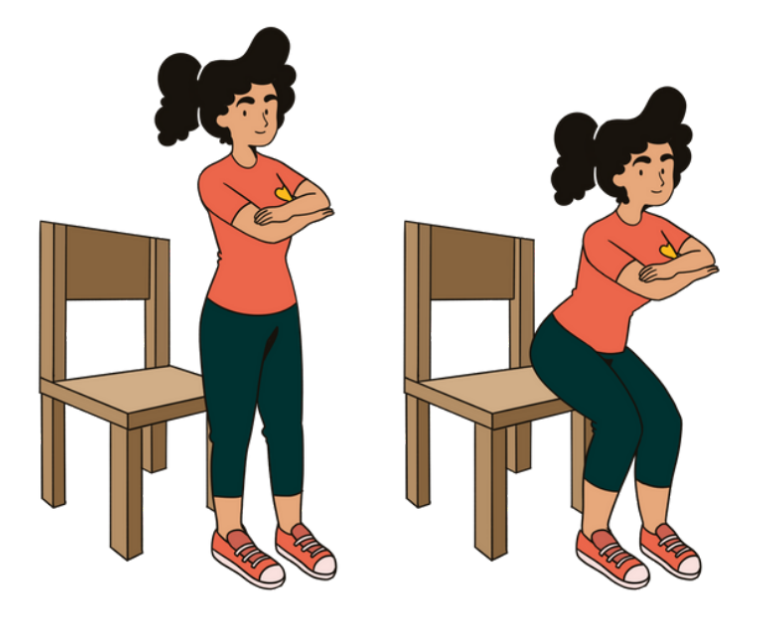
Make it easier: Take a load off! For a bit more support, try sitting down to rest after each rep. You can pause for just a moment or give yourself a few seconds of rest fi you need it.
Make it harder: Ditch the chair when you're ready! Try doing a regular squat by following the same steps, but instead of touching your butt to the chair, stop when your legs are at a 90-degree angle and then come back up.
Chair Dips
How to do a chair dip:
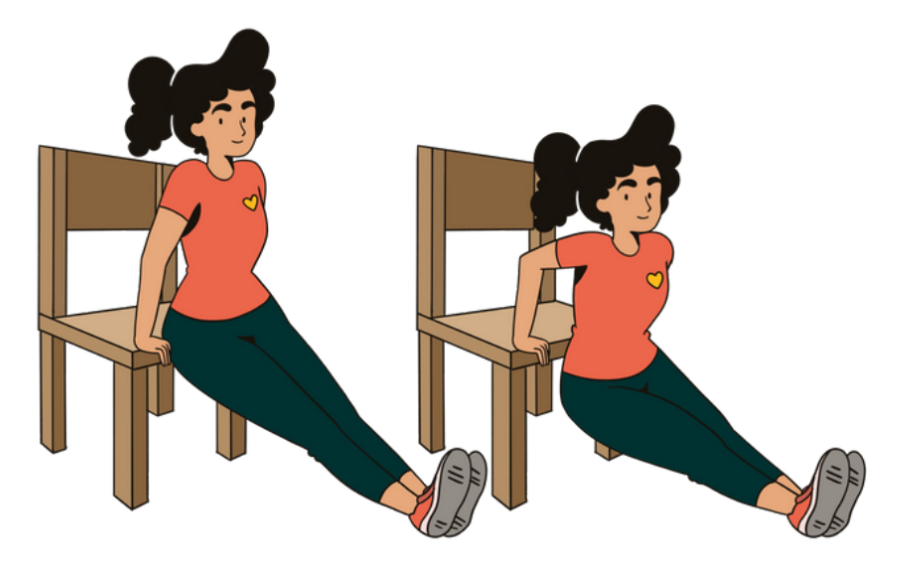
Make it easier: You can make this exercise easier by moving your feet closer to your body and bending your legs or harder by moving your feet even further out.
Make it harder: Place your hands close together on the chair to isolate your triceps muscles when you dip. This should make the move more challenging as it forces your triceps to work even harder.