A MiSalud Health worksite screening takes about 20 minutes, requires no fasting, and checks vitals, blood pressure, and A1C and lipids from a dried blood spot. A bilingual health coach explains results in English or Spanish. Employers receive aggregate, de-identified reporting only. In MiSalud Health screenings, 74% of employees had at least one chronic condition and more than half were unaware.
It finds chronic conditions that people did not know they had. Among the employees screened, 74% had at least one chronic condition, and more than half were unaware.
The figure comes from MiSalud Health screenings, so it describes the employees who were screened. Any one workplace will have its own picture, which is the reason to run a screening.
That number matters for two reasons. A person who does not know about a condition cannot manage it. An employer who does not know how common conditions are across their workforce cannot plan for them. A screening gives both of them something concrete to work from.
For HR and operations teams comparing onsite screening options, this is the first result to look at. A screening that returns nothing a person did not already know is hard to justify. One that surfaces conditions people were unaware of is doing the job it was set up to do.
A screening takes about 20 minutes, and nobody has to fast first. Vitals and blood pressure are checked, and A1C and lipids come from a dried blood spot.
Skipping the fasting requirement keeps the visit simple. Nobody has to plan their morning around a missed meal. Twenty minutes is short enough to fit inside a workday.
For an employer weighing options, the format settles two practical questions up front: how long a screening takes and whether people need to prepare. The answers here are about 20 minutes, and no.
Family members 18 and over are welcome, so an employee's family can be screened too.
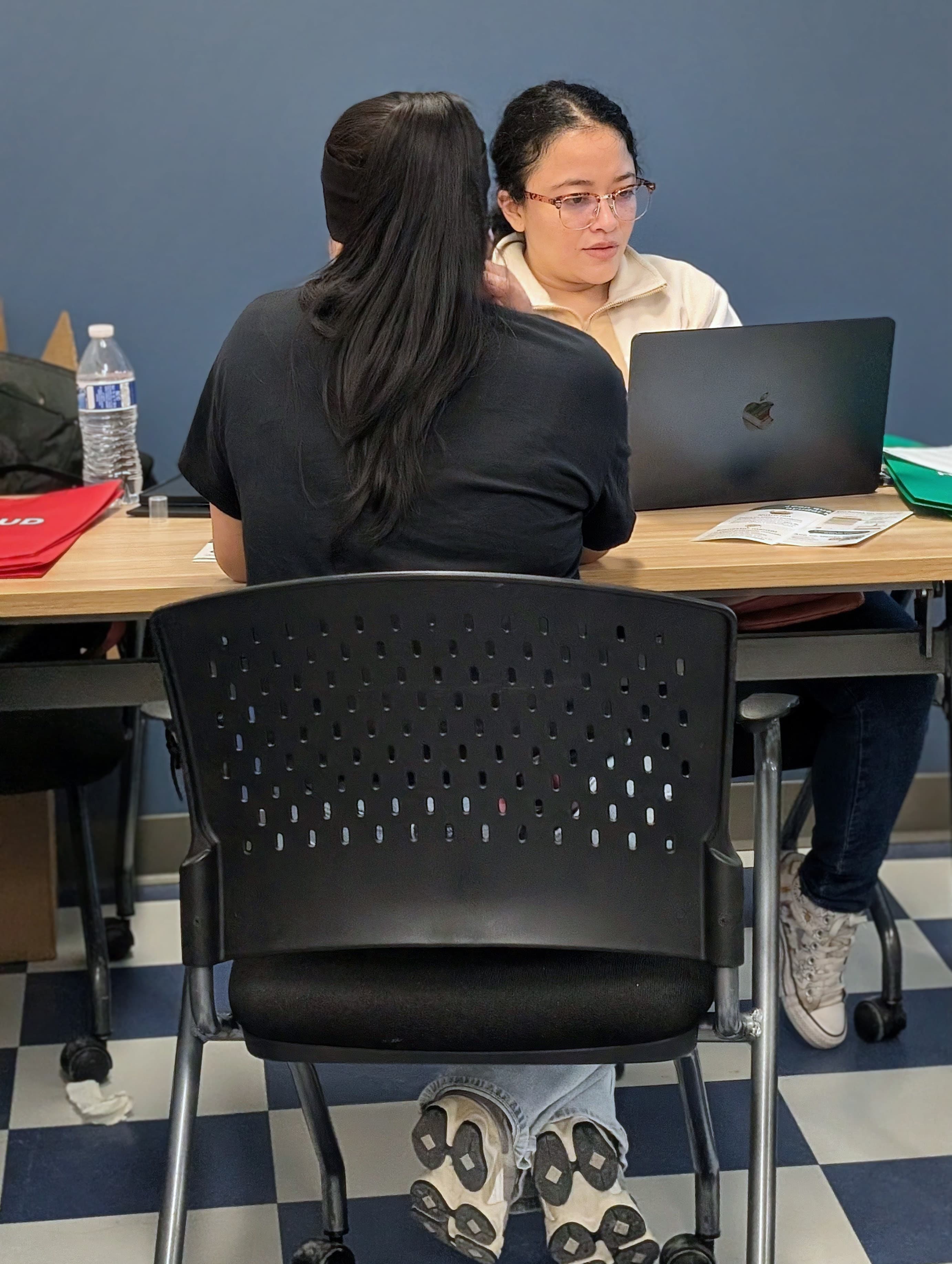
A bilingual health coach explains the result in English or Spanish. A number on a page means little until a person explains it, and it helps to hear it in the language a person is most at ease in.
Given how many people in these screenings were unaware, how a result is explained carries real weight. The conversation is where a finding stops being a line on a report and becomes something a person can act on.
A concerning result is not an end point. It is the start of a conversation with a health coach.
More on how MiSalud Health supports people living with a chronic condition is on the Chronic Conditions page.
Employers receive aggregate, de-identified reporting only. In practice that means a picture of the group as a whole, with no individual's results attached.
That boundary decides what the report can be used for. Group-level information can answer questions about the workforce as a whole. It cannot answer questions about any one person. A benefits leader reading that report is looking at the workforce, not at individuals, which keeps the focus on questions an employer can act on. For the people planning a screening day, the boundary is worth explaining to employees up front.
MiSalud Health reports $8,600 saved per year per diabetes patient managed and $2,800 saved per year per hypertension patient managed.
Those figures are per patient. A benefits leader can set them against their own headcount, and the total for any one employer depends on how many people are found and then managed.
This is where the screening finding meets the budget. A condition that is found can be managed, and a managed condition carries the savings above.
No single figure should carry a budget decision. Treat these two numbers as a starting point, and ask for the assumptions behind any savings figure from any vendor, MiSalud Health included.
A MiSalud Health screening day follows the format described above: about 20 minutes, no fasting, vitals and blood pressure checked, A1C and lipids from a dried blood spot, and results explained by a bilingual health coach in English or Spanish.
MiSalud Health is a bilingual hybrid care platform that employers offer as a health benefit, and the screening day is one way they work with an employer's people.
When comparing screening options, four details tell most of the story: whether fasting is required, who explains the results and in which language, what the employer receives, and whether family can attend. For MiSalud Health the answers are no fasting, a bilingual health coach in English or Spanish, aggregate and de-identified reporting only, and yes for family members 18 and over.
Employers planning a screening day can start with the screening day estimate on the Lab and Screenings page.
Planning a screening day for your organization? See if it's a fit.
Do employees need to fast?
No.
Can family members attend?
Yes, family members 18 and over are welcome.
What does the employer receive?
Aggregate, de-identified reporting only.